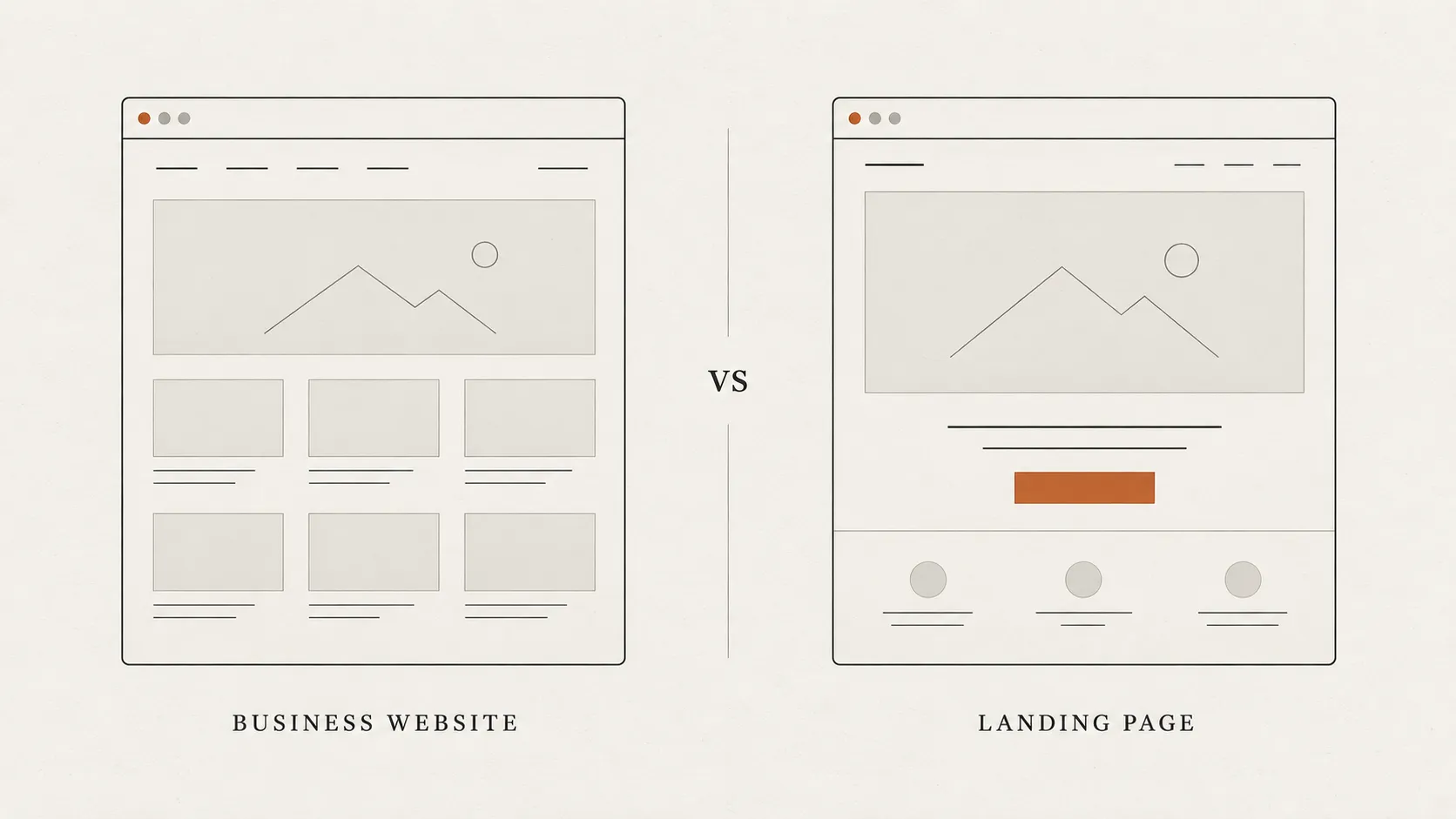
How to plan a business website before design
Learn how to plan a business website before design: decide what each page needs to explain, what evidence to show and how visitors should reach the next step.
A new website often begins with visual references. Someone likes the navigation on one site, the photography on another and the way a third site moves as you scroll. Those examples can be useful. They cannot tell you what your own customers need to understand before they enquire.
The first job is to decide what the website must accomplish. A business with one clearly defined service may need a focused set of pages. A company with several audiences, services and locations may need a more considered structure. The number of pages follows the job; it does not define it.
Start with the questions people bring
Think about the conversations you have before someone becomes a customer. What do they ask first? What do they misunderstand? What do they need to know about scope, process, timing or suitability?
Write those questions down. Group related questions together. Some belong on a service page, some on the studio or about page, and some are better answered through examples of actual work. If a question is important to the decision, the visitor should not have to dig through three menus to find the answer.
This is the beginning of a site structure: a set of pages organised around useful decisions, rather than a list of pages inherited from a template.
Give every page a job
A homepage should establish what the business does, whom it helps and where to go next. A service page should explain the offer in enough detail for someone to judge whether it fits. A work page should demonstrate what was done. A contact page should make the next step straightforward.
Those jobs can overlap, but they should not compete. When every page tries to say everything, visitors get repeated introductions and very little progress. When each page does one useful part of the work, the navigation becomes easier to understand and the copy becomes easier to write.
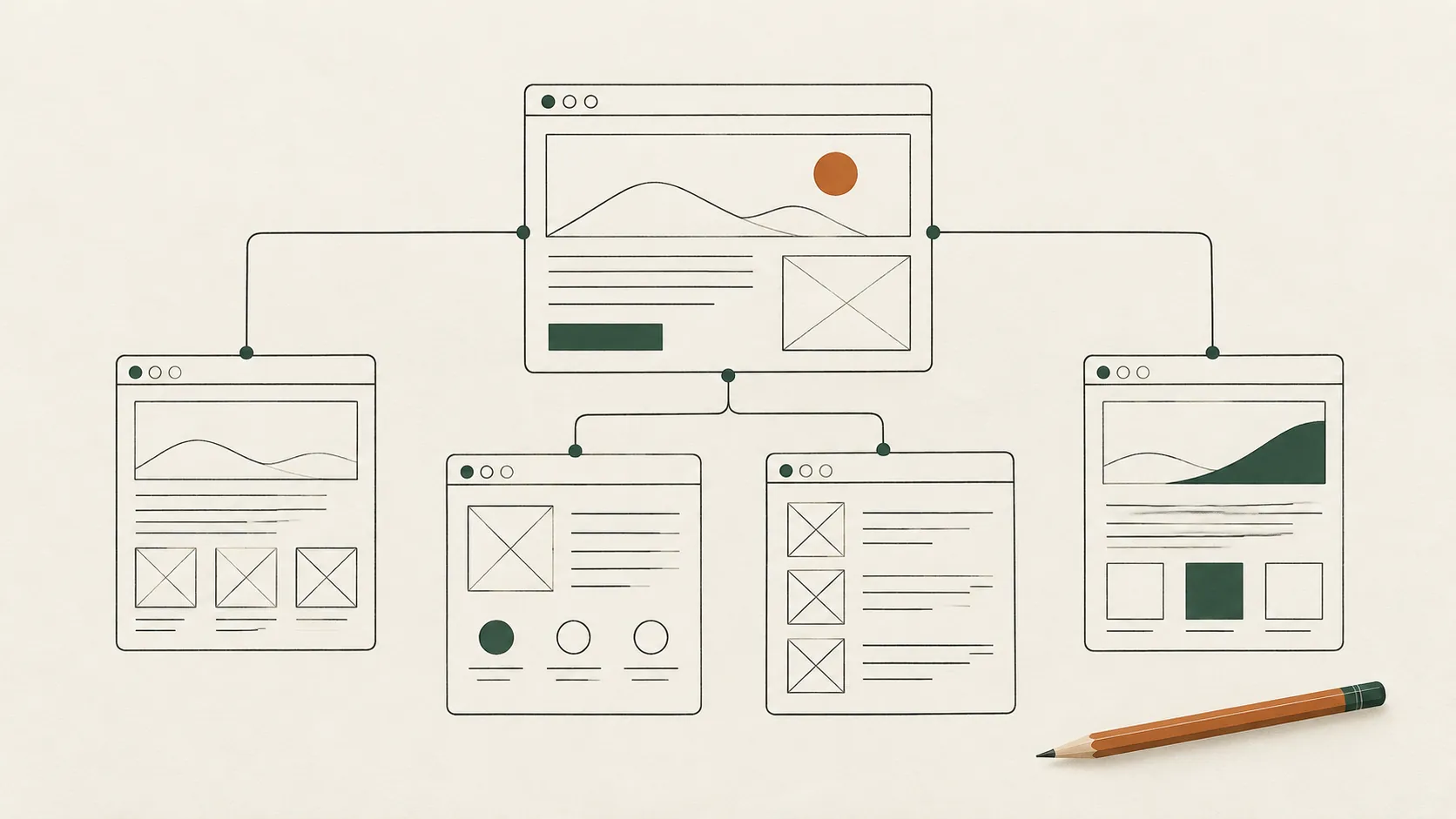
For a business considering a new site, the practical output of planning is not a grand strategy document. It is a page map, a clear purpose for each important page, the questions each page must answer and a sensible route towards an enquiry.
Decide what needs to be shown, not only said
Some claims need evidence. If you say that your process is thorough, explain its stages. If you say your work is tailored, show a real project and the decisions behind it. If clients will ask how they can update the finished website, decide what the editing workflow should include.
These requirements affect design and development. They are easier to address while the site is being planned than after layouts have been approved.
A small website still benefits from a plan
Planning does not have to make a modest project complicated. It can prevent unnecessary pages and features. A five-page website can be excellent if its five pages cover the decisions customers actually make.
How to plan the first draft
You can make a useful start without designing a single screen:
- Gather the questions prospective customers ask before they commit.
- Group those questions into pages, giving each important page a clear purpose.
- List the real examples, process details or other evidence each claim will need.
- Sketch the routes from a visitor's first question to the right enquiry.
That draft gives a designer, writer and developer something concrete to work from. It also gives you a way to judge whether a proposed page or feature has a reason to exist.
At Good & Able, our approach begins with those decisions, then moves into copy, design and development. If you are deciding the shape of a new site, see how we build business websites. If you are unsure whether you need several pages at all, start with our guide to choosing a business website or a landing page.