Web app & marketing site
Variation Vault
A web app that lets trades price an extra on site and get the customer's approval on their phone before the work starts, and the website that explains it.
The business
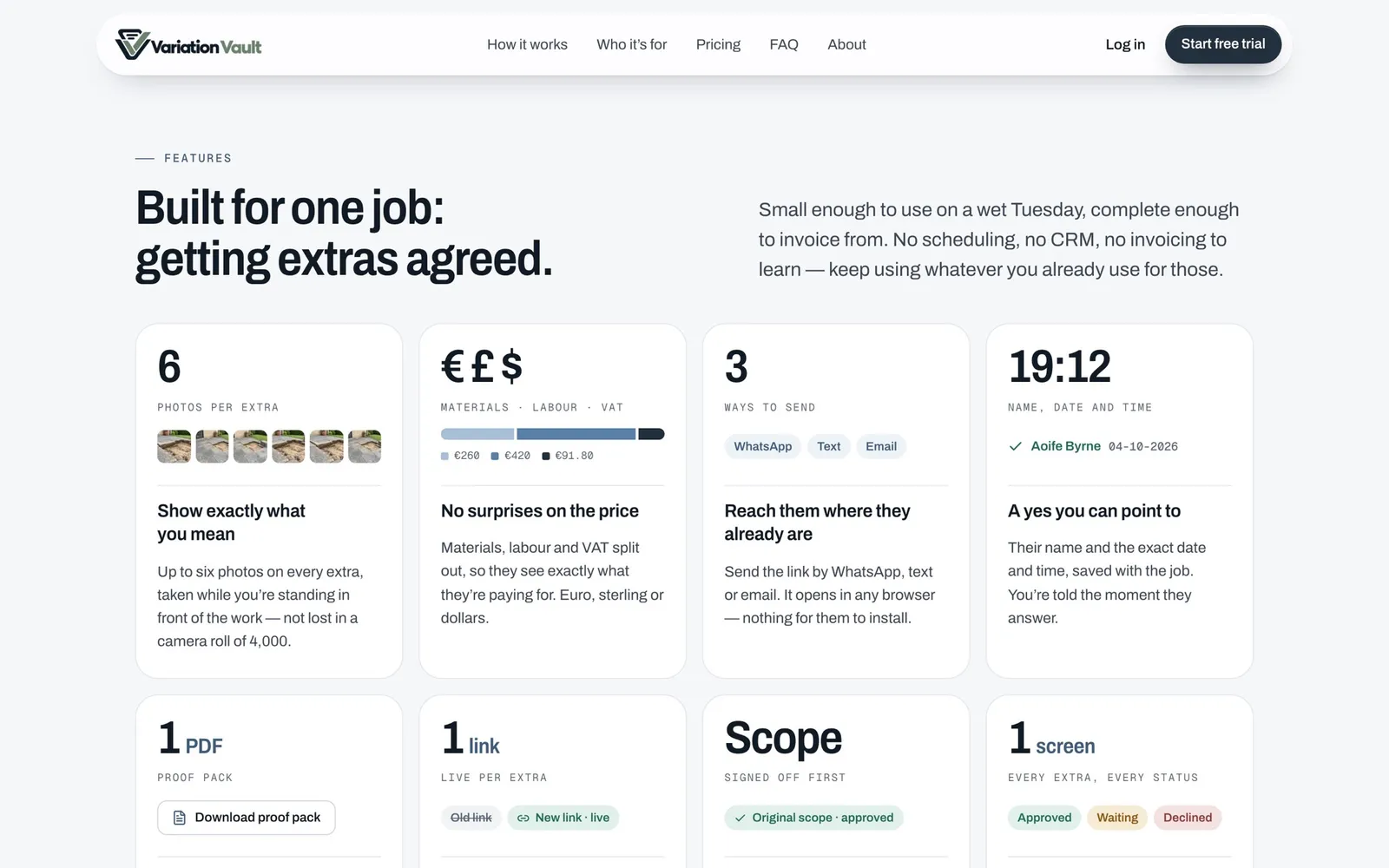
Variation Vault helps tradespeople get extra work agreed before they start it. When a customer asks for something that wasn't in the quote, or the job turns up something that needs fixing, the trade prices it on their phone, adds photos and sends the customer a link by WhatsApp, text or email. The customer approves or declines in their browser, with no app to install and no account to create. Their name, the date and the time are saved with the job.
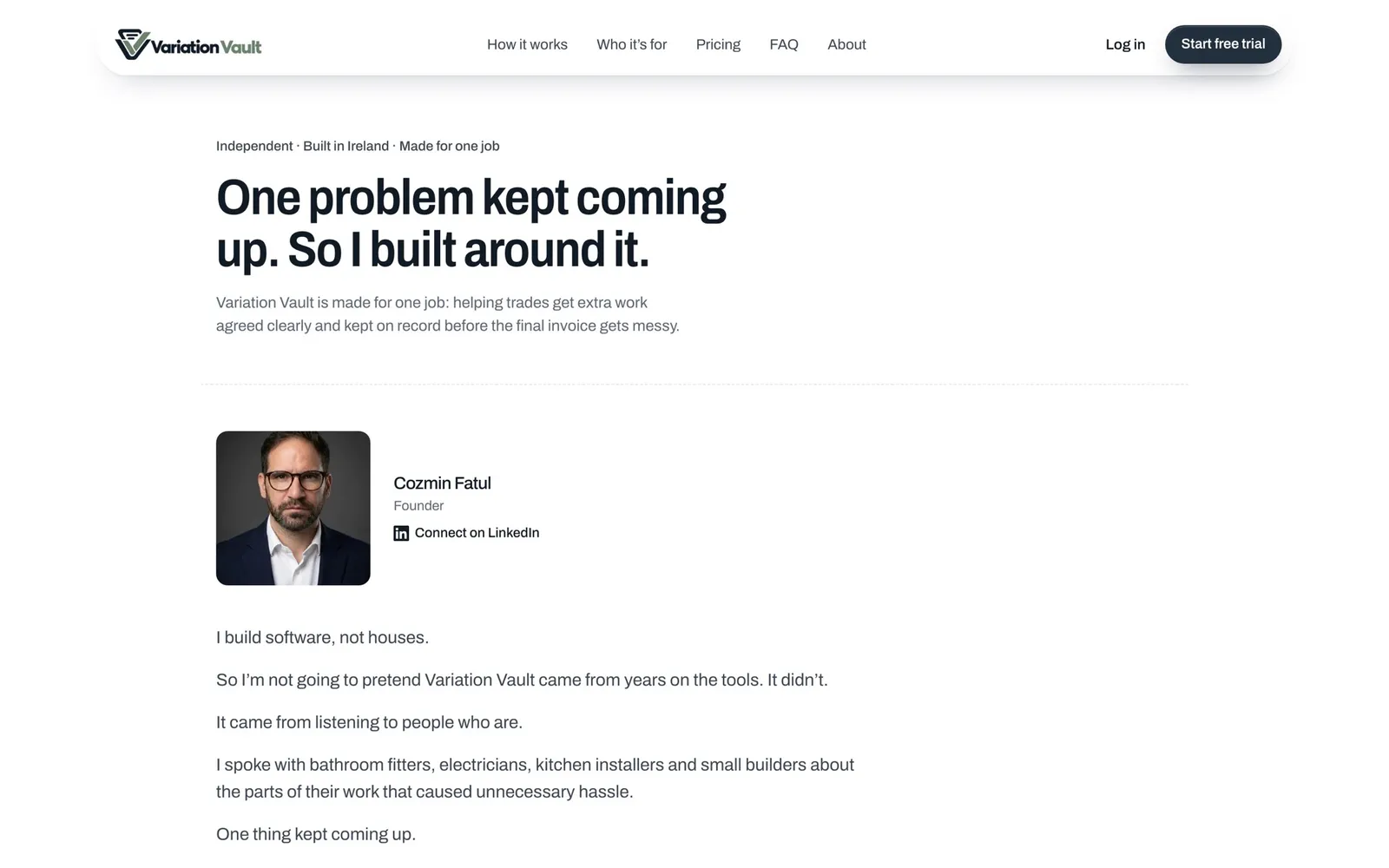
It's my own product. Before I built it, I spoke with bathroom fitters, electricians, kitchen installers and small builders about the parts of their work that caused unnecessary hassle. Extras kept coming up.
The challenge
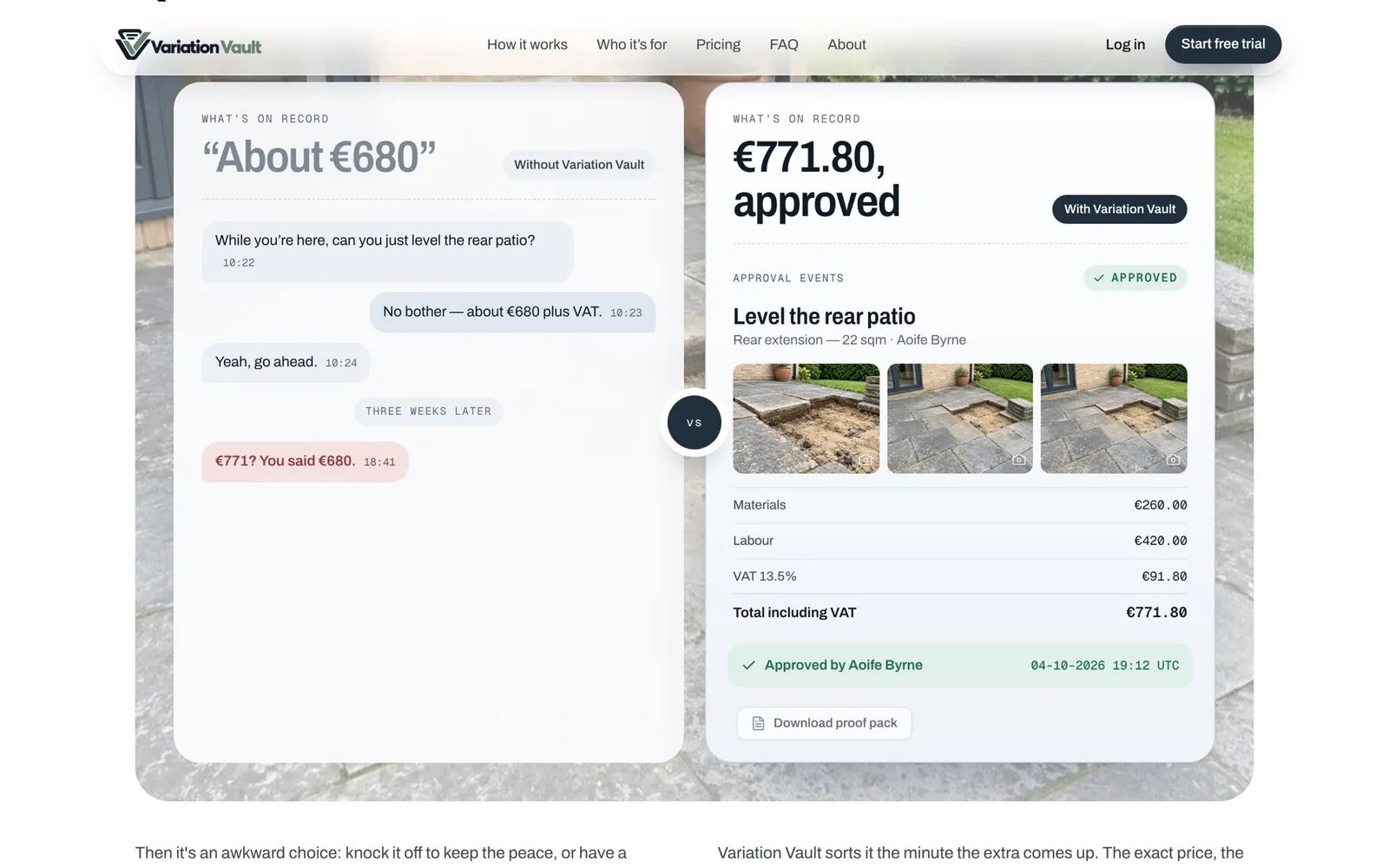
Extras are usually agreed in a quick conversation on site. A rough price gets mentioned, the customer says go ahead, and the work gets done. Weeks later the final invoice arrives and the customer remembers a different number. By then, what was agreed is buried in WhatsApp messages and a camera roll.
There's plenty of software for trades already, for quoting, scheduling, invoicing and running a team. None of it was built around this one moment, and most of it expects you to move your whole business into it.
The direction
I kept the product to one job: record the extra, show the customer exactly what they're agreeing to, save their answer and keep it with the job. Variation Vault doesn't schedule work, create invoices or take payments, so trades keep using the tools they already have. That boundary is written into the project's rules, and the website states it plainly.
Structure
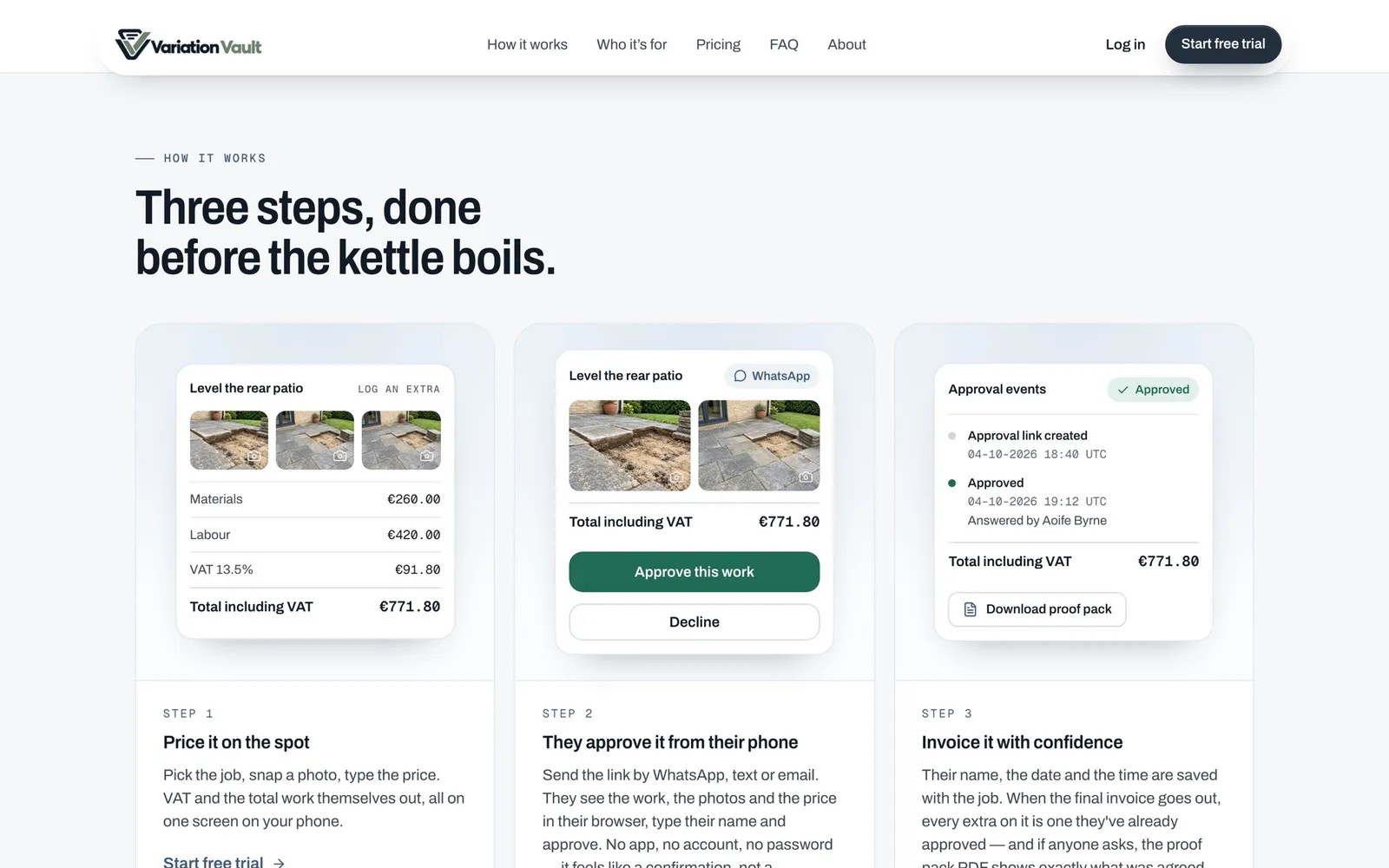
The app is built around the moment on site. Logging an extra takes one phone screen in four steps: the job, the photos, the work and the price. The save button stays pinned to the bottom of the screen, and the link can go out through WhatsApp or the phone's own share sheet.
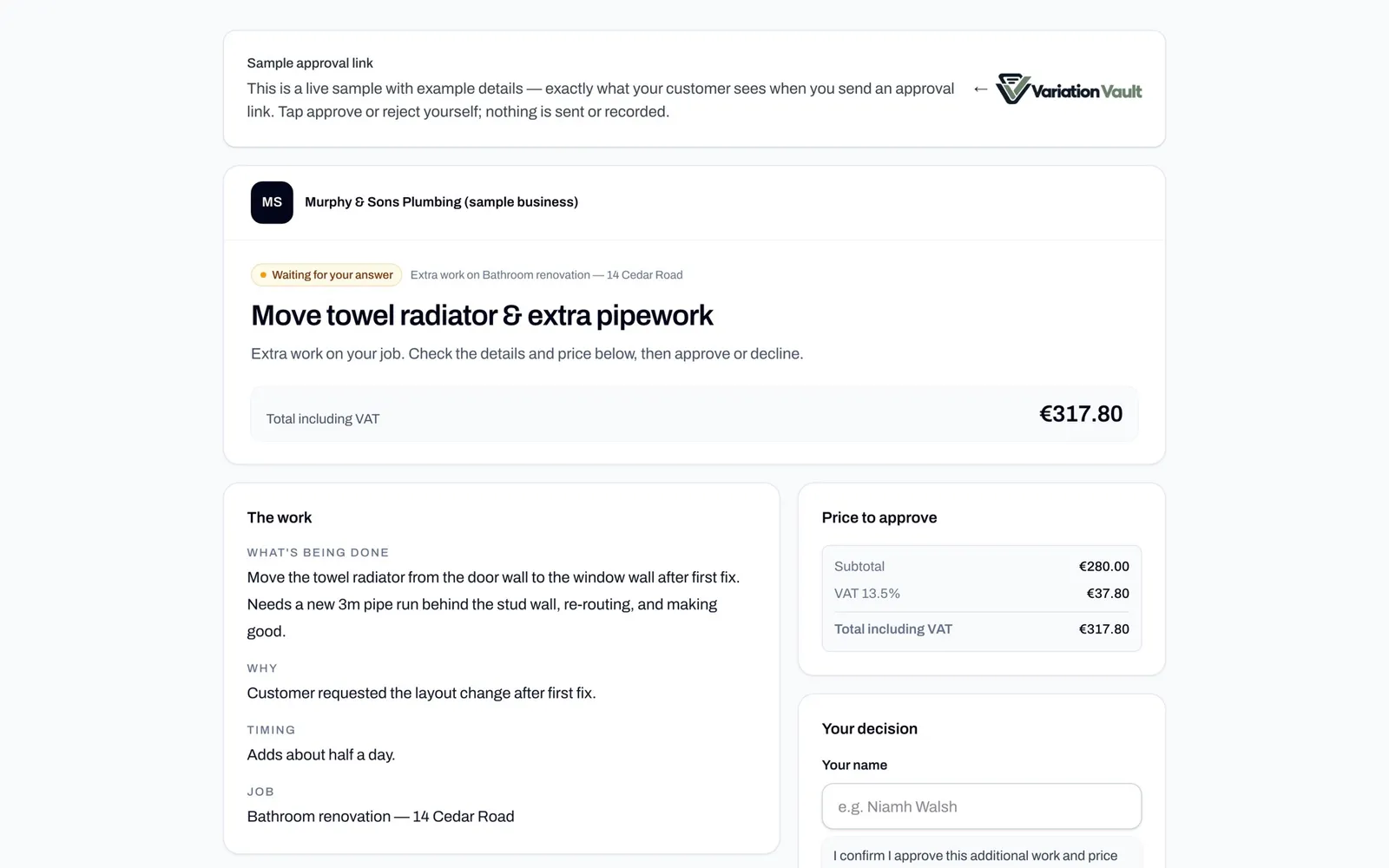
The customer's approval page puts the business, the work and the total first, then the photos and the price breakdown, then the decision. Customers read what they're paying for before they reach the buttons.
The website follows the order a trade would ask questions in: the problem, how it works in three steps, who it's for, the features, the price and the FAQ. Anyone can open a live sample of the approval page and try it. It's built from the same components as the real page, so the two can't drift apart.
Messaging
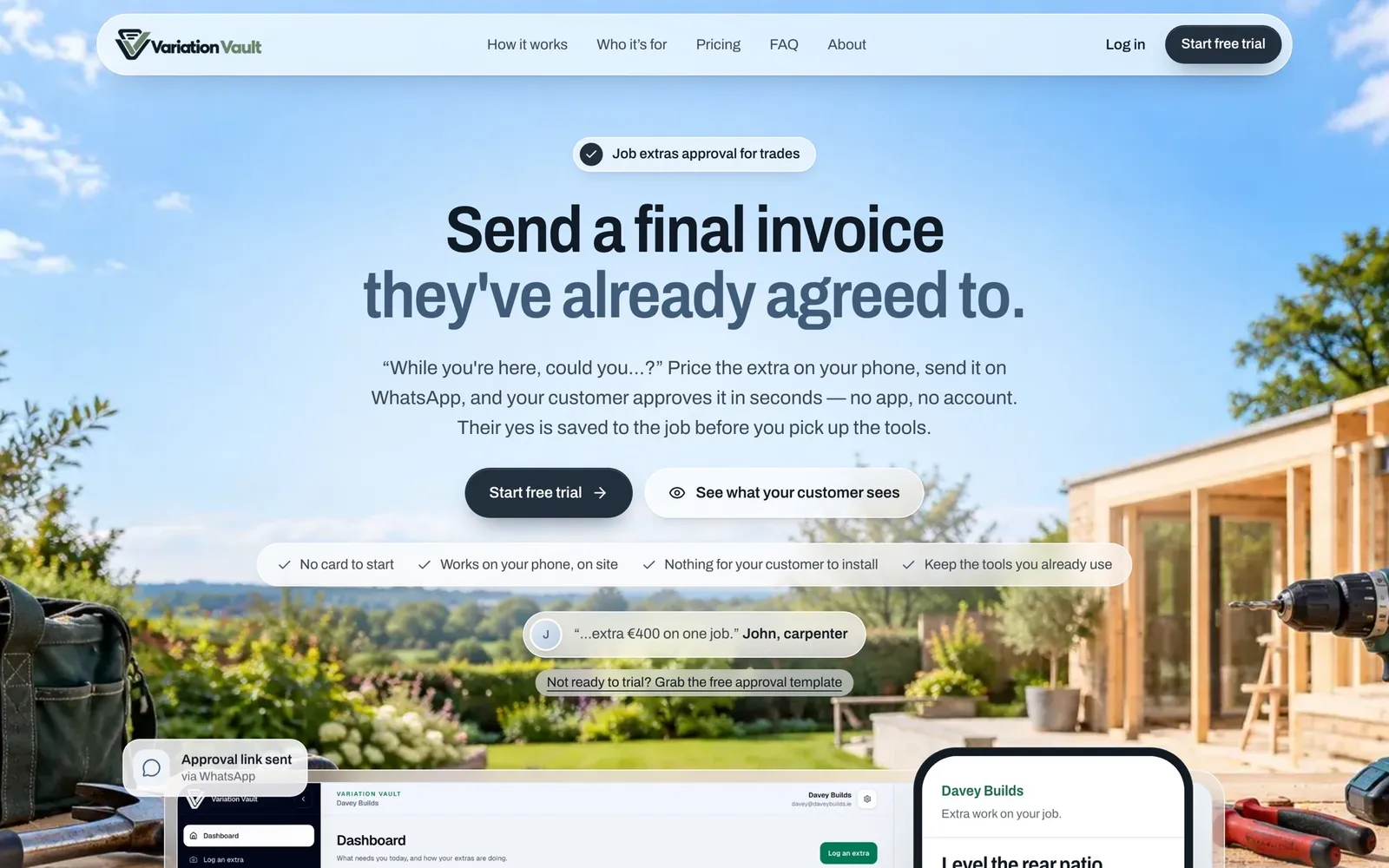
The copy starts from the way the problem sounds on site: “While you're here, could you…?” The headline promises the one thing the product does: a final invoice the customer has already agreed to.
I kept out anything the product can't back up. It doesn't take payments or create invoices, so the site never suggests it does, and the customer quotes are the customers' own words.
Design
The website has a bright, outdoor look: a garden behind the hero, a navy and steel palette and the Archivo typeface, self-hosted. Every product screen on the page comes from the real app. The screenshots and the product tour video are captured from the running app on demo data, and the drawn screens all show the same worked example, levelling a rear patio, so the page tells one story from top to bottom.
The app is plainer and built for a phone on site, with one green button per screen for the next step, and the VAT and total worked out as the price is typed.
Development
Variation Vault runs on Next.js and TypeScript, with Supabase for the database and private photo storage, Stripe for subscriptions, Resend for email and Vercel for hosting.
The token in each approval link is never stored in raw form, and every resend switches the old link off, so a customer can only approve the latest price. Photos sit in private storage and are shown through short-lived links. Public approval pages are rate limited. Proof packs are PDFs generated on the server with the business's logo, the photos and the approval. The app can also be installed on a phone's home screen.
The result
Variation Vault is live at variationvault.co. Trades can start a 7-day free trial without a card, log extras, send approval links and download proof packs, then subscribe through Stripe for €19.99 a month or €129 a year.
Planning something similar?
Tell me about the business and what the website needs to achieve.